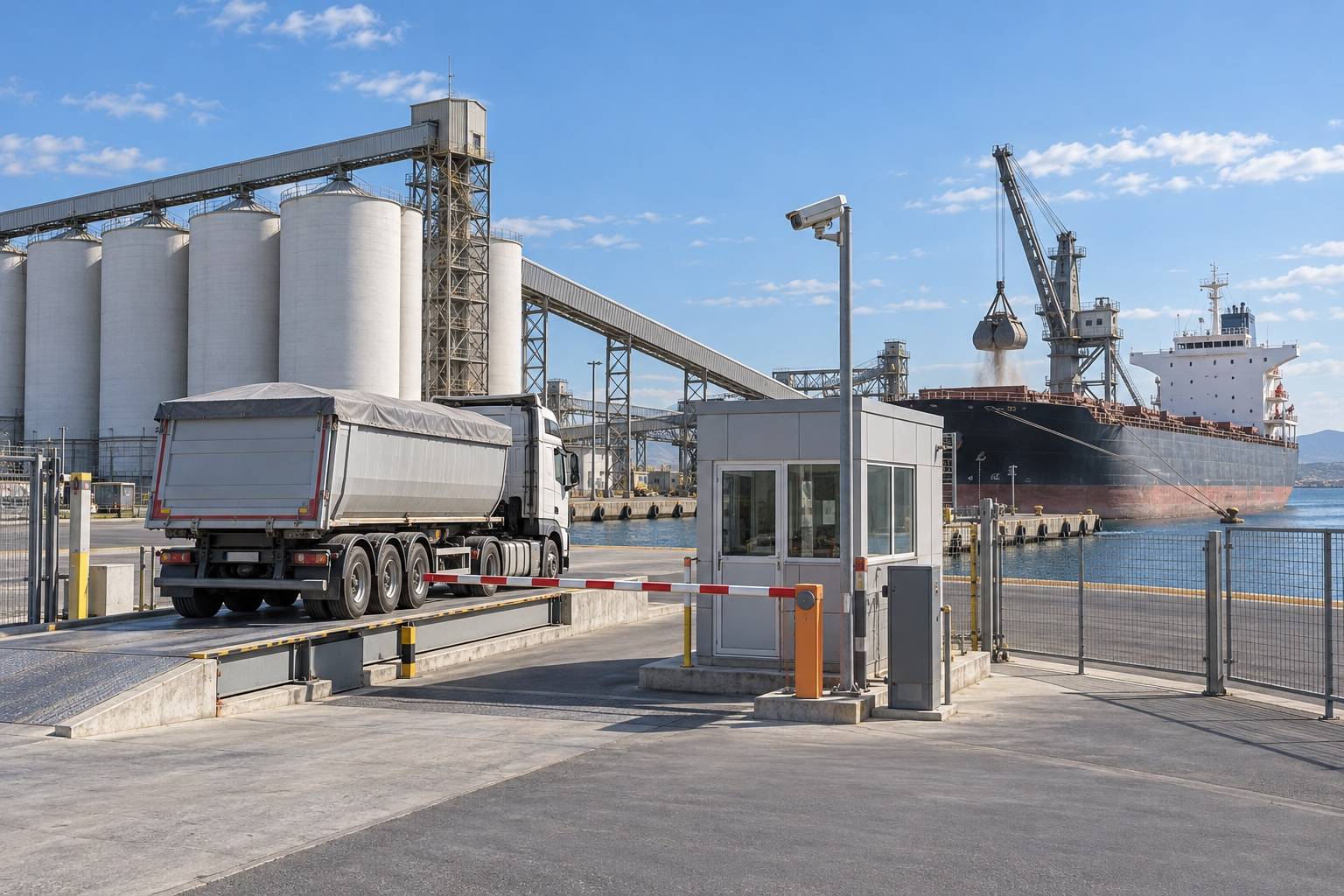
Terminal, 3PL and freight forwarding software on Microsoft Dynamics 365. Whether you handle cargo on the quay, store and repack it in the warehouse or buy carrier capacity for your shippers, Flex registers every service once, where the work happens, and turns it into a correct invoice. Connected to the WMS and equipment you already run.
Work done on the quay or in the warehouse, missing from the invoice.
Terminal services, storage and freight depend on the contract, the cargo and the actual work. When services are registered in several places, some of them never reach the invoice.
Sampling or repacking done, but never invoiced.
Storage billed on an estimate instead of actual in and out times.
WMS and finance reconciled by hand.
Customers asking why an invoice differs from their agreement.
Purchase costs not linked to the correct booking.
Differences between purchase costs and sales invoices found only at reconciliation.
Who it is for
Three businesses, one order flow.
Many terminals also run warehousing and value-added services, and many logistics providers arrange transport and customs as well. Flex supports each role in one order flow on Microsoft Dynamics 365.
Terminal operators
Terminal services and storage
Containers, dry and liquid bulk, breakbulk and RoRo, each with its own planning, storage and handling. Handling, idle time, storage and cargo services invoiced from the contract.
Warehousing and 3PL
Storage and value-added services
Goods in store per owner, lot and location. Sampling, blending and repacking recorded on the customer order and billed with the storage.
Freight forwarders
Bookings and margin per shipment
Capacity bought from carriers and services sold to shippers on the same booking, so purchase costs, rates and surcharges flow straight into the invoice.
How it works
From contract to cash in one order flow.
Operational activities feed the financial process directly. Tariffs and contracts are managed in one place, and every step stays traceable from receipt through storage and handling to release. Nobody retypes what the gate or the warehouse already recorded.
01ContractTariffs, volumes, SLAs and handling conditions recorded centrally per customer.
02Inbound planningExpected arrivals, with pre-notifications from carriers.
03ReceiveGate, weighing and receipt on the customer order.
04StoreStock by location, owner and commodity.
05HandleEach service recorded as it happens.
06ReleaseTo the owner or a new owner, with an electronic CMR.
07InvoiceInvoice lines from actual execution: handling, idle time, storage and cargo services.
08MarginExpected versus realised margin per customer, order or cargo type.
Handling, Idle time, Storage per day, Per ton, Per cargo type, Sampling, Blending, Repacking, Customs documents
Handling
Idle time
Storage per day
Per ton
Per cargo type
Sampling
Blending
Repacking
Customs documents
Handling
Idle time
Storage per day
Per ton
Per cargo type
Sampling
Blending
Repacking
Customs documents
Storage billing
Storage counted from actual discharge.
Storage billing only helps if it starts from what actually happened. When a large vessel takes several days to discharge, storage starts at a different moment for each part of the cargo. Flex calculates storage from actual unload, load, receipt and release times, under the billing model in the contract.
Illustrative example
Three lots, three start dates
Day 1Day 2Day 3Release
Lot discharged on day 1
Lot discharged on day 2
Lot discharged on day 3
Storage counted per lot from its actual discharge
A flat-rate contract counts the full cargo from day one
Example flow, not customer data. Flex applies whichever model the contract specifies.
Billing models
Per day, per ton, per cargo type
Variable billing models next to flat rates, applied from the contract instead of a spreadsheet.
Invoice types
Handling, idle time, storage, cargo services
Performed activities, deployed resources, weights and quantities become invoice lines in line with the agreement.
Deviations
Planned versus executed, traceable
Any difference between planned and executed work stays visible, so invoices hold up when a customer asks.
Insight
Storage flow and delays
See where storage space goes and where cargo waits, and give customers a portal to follow their own cargo.
Storage and handling
Value-added warehouse services on the same customer order.
A 3PL earns its margin in the services around storage. When sampling, blending or repacking live in a spreadsheet next to the WMS, they get done but not always billed. In Flex every service is part of the order it belongs to.
Billed on the same orderEvery service is part of the order it belongs to
Storage
Goods in store per owner, lot and location, with receipt and release times recorded at source.
Handling
Unloading containers, terminal handling, loading and transfers, linked to the order and the customer.
Sampling and quality control
Samples taken for merchants and quality checks, recorded as activities you can report on and bill.
Blending and processing
Product-specific work such as blending coffee or flavouring tea, with its own handling rules.
Repacking
Repacking and other value-added services, captured when they are done instead of reconstructed later.
Customs and documents
Customs formalities and documents for import and export, kept with the goods they cover.
Services as offered by Vollers Group, a Flex customer in commodity logistics.
Gate, yard and WMS
Connected to your WMS and the equipment at the gate.
Flex is not a WMS and does not try to be one. Your WMS, silo control and gate equipment keep doing their job. Flex Connect links them to the customer order, the stock position and the invoice. ISPS rules require full registration of persons and vehicles, and time slots let only scheduled vehicles in.
01Pre-registrationCarriers book a time slot in advance.
02IdentificationOCR, RFID and QR scanners recognise the truck or container at the gate.
03ValidationChecked against the booking; the barrier opens automatically.
04WeighingFull and empty weights validated through the weighbridge integration.
05Your WMSLocations and stock movements stay in the system built for them.
06Customer order in Flex RunReceipt, storage, services and release land on the order they belong to.
07Dynamics 365 FinanceStorage and services invoiced from that order.
At the Vollers HoogTij cocoa terminal in Amsterdam, Flex is integrated with barriers, traffic lights, weighbridges, OCR, RFID and QR scanners, the MES silo software and Transfollow eCMR.
Freight forwarding
Purchase and sales rates on the same shipment.
You buy capacity from carriers and sell services to shippers. Ocean freight rates shift weekly, contract and spot rates run in parallel, surcharges such as BAF, CAF and PSS are calculated differently per carrier and exchange rates move the final margin. Flex links both sides on every booking.
When an LCL consol is confirmed, purchase costs are captured on the booking.
Rates, surcharges and local charges are passed through correctly in quotes and invoices.
When the shipment closes, the sales invoice is ready, faster and with fewer errors.
When a route changes or an ETA shifts, the impact on planning and invoicing shows straight away.
More than freight forwarding accounting software
Flex Run keeps the operational record and Dynamics 365 Finance keeps the books. Because both work from the same booking, the month-end close becomes a verification instead of a recovery exercise.
Three end-to-end workflows for customer agreements, freight quotes and customs. Each page shows the steps, the people who decide and which Flex products do the work.
No. Flex does not replace your WMS or the systems that control your equipment and yard. It runs the business around them on Microsoft Dynamics 365: contracts and customer agreements, work orders, value-added services, storage billing and finance. Flex Connect exchanges data with your WMS, silo control and gate equipment.
02
How does storage billing work?
Storage is calculated from actual discharge, load, receipt and release times, not from estimates. You can bill per day, per ton or per cargo type and apply different rates for different commodities and customer agreements. Flat-rate models, where the full cargo is charged from day one, are supported as well.
03
Can we bill sampling, blending and repacking?
Yes. Value-added services are recorded as activities on the customer order when they are done, so they appear on the invoice and in your reporting instead of being reconstructed afterwards.
04
Which cargo types does the terminal software support?
Containers, dry bulk, liquid bulk, breakbulk and RoRo cargo, each with its own planning, storage, tracking and handling processes.
05
Does Flex support ISPS access control at the gate?
Yes. Persons and vehicles are registered in full, with pre-registration, time slots, licence plate recognition and access keys. Integrations with barriers, OCR, RFID and QR scanners and weighbridges let validated vehicles in automatically.
06
Is Flex a separate freight forwarding software package?
No. Flex adds the maritime processes, such as bookings, House and Master documents and billing, to Microsoft Dynamics 365 Finance and Operations, which provides the finance foundation.
07
Does it work for several sites or companies?
Yes. Vollers uses the same order flow across its sites; HoogTij was the tenth Vollers business unit automated with Flex.