Skip to content

Container traders & lessors

Know what every container costs and earns.

Shipping container management software for container traders and lessors. For you the container is the product: bought as an investment, earning through lease and sublease contracts, or sold when the market is right. Flex Maritime Logistics follows each container from sourcing to finance, so equipment, contracts, condition and money stay in one system on Microsoft Dynamics 365.

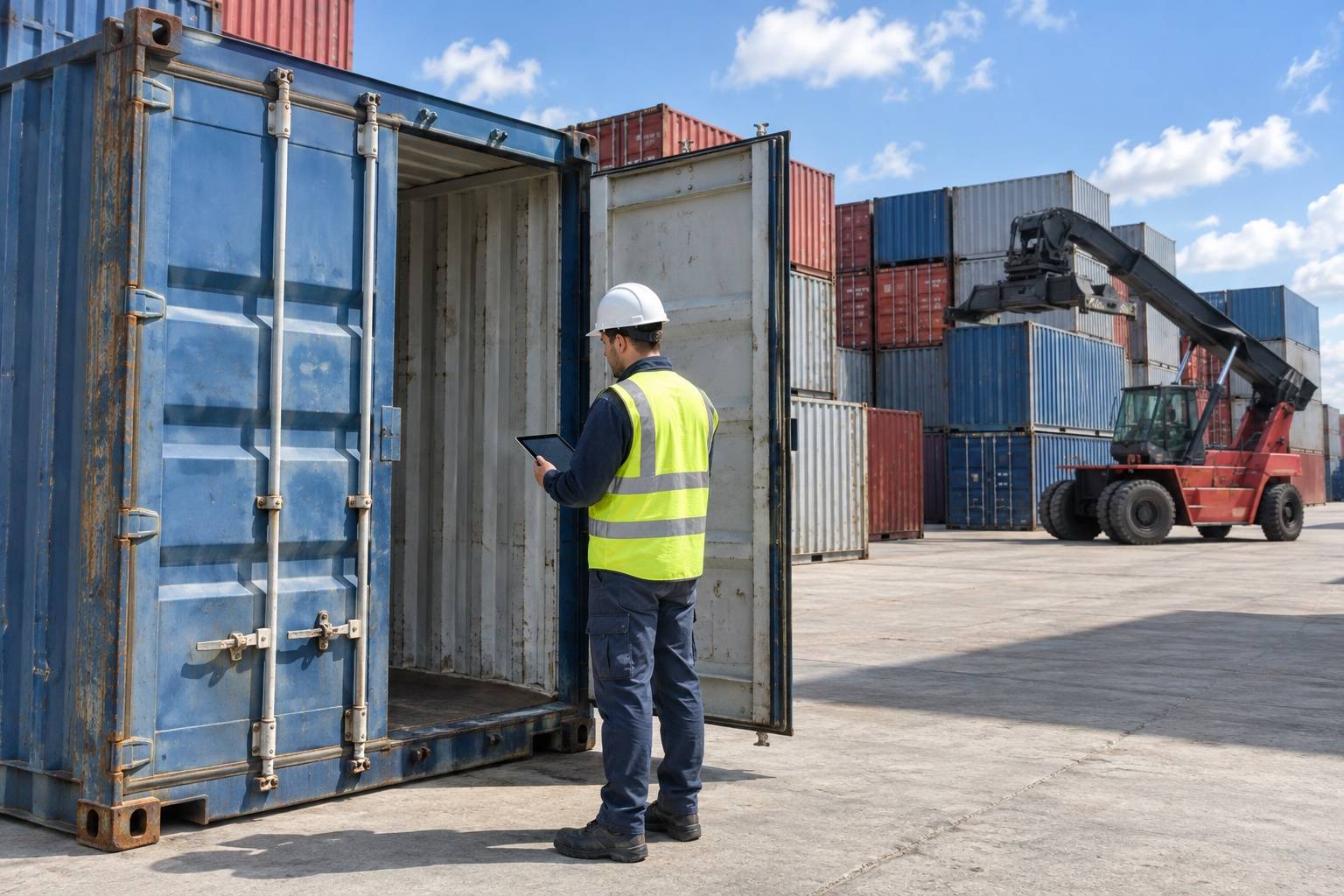
Depot technician with a tablet inspecting the open doors of a used blue shipping container, stacked containers and a reach stacker behind

Flex on Microsoft Dynamics 365

Recognisable?

When operations and finance drift apart.

Operations track movements, finance tracks invoices and depreciation, commercial teams manage contracts. The container moves through all three. When the data is not aligned, the same problems keep coming back.
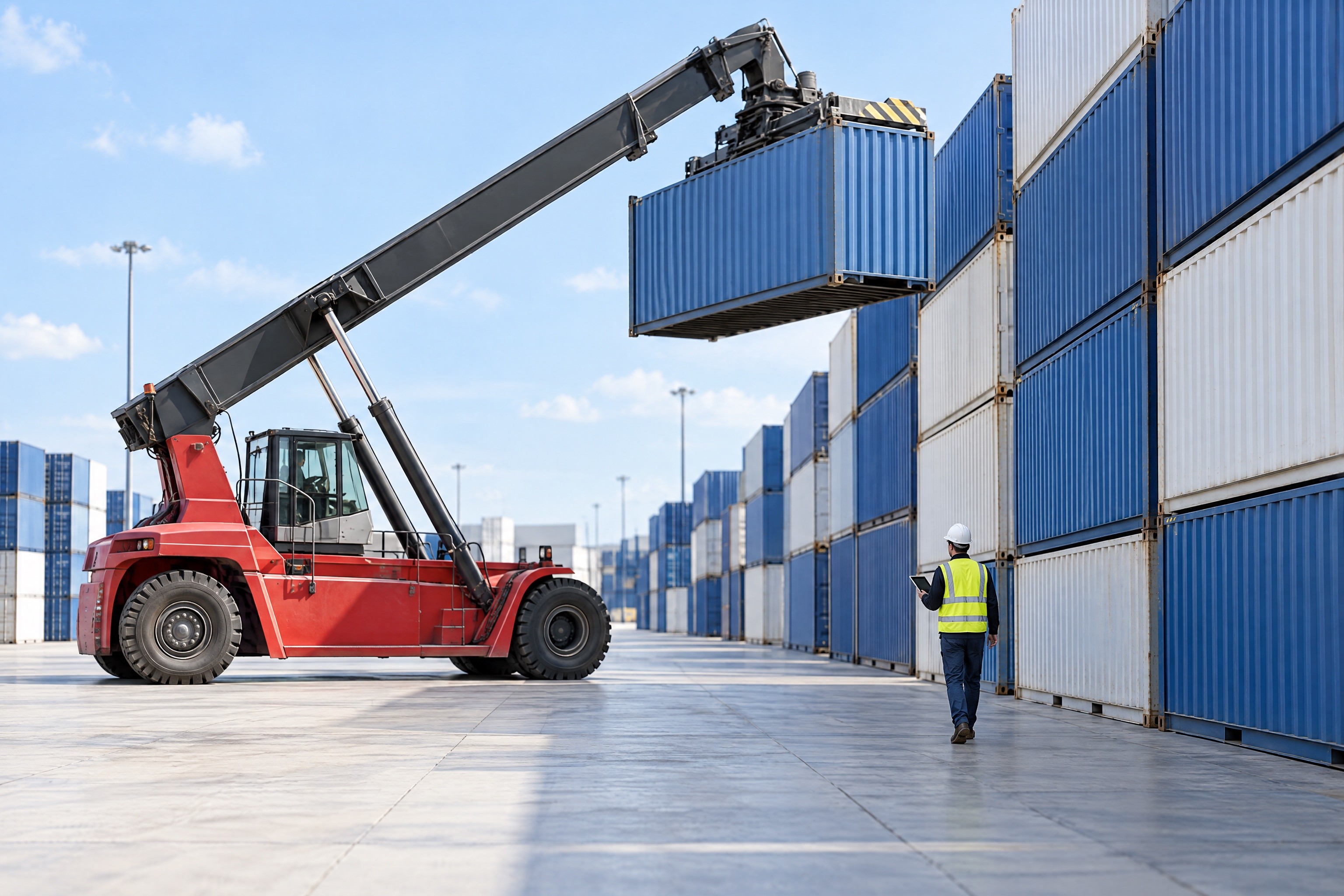
Reach stacker lifting a blue container onto a stack in a depot while an inspector with a tablet walks along the rows
One container, three teamsOperations, finance and commercial
  • Lease costs not charged

    Lease costs are not charged or recharged correctly, so margin leaks without anyone noticing.

  • Idle time out of sight

    Nobody sees how long containers sit unused, so utilisation is never linked to return.

  • Unclear condition

    Condition and maintenance records sit outside the fleet data, so nobody knows what a unit is fit for.

  • Disputed invoices

    Invoices are disputed afterwards because contract, movement and charge do not match.

  • Residual value ignored

    Residual value is not managed actively or included in investment decisions.

  • Customers want more

    Customers expect status updates, certificates and a clear service history for the units they use.

One object, three roles

What is a container in your business model?

Depending on the business model, the customer and the contract, the same box plays a different role. That role decides how contracts are set up, how costs and revenue are allocated and how investment decisions are made.
  • Role 1

    An operational tool

    For logistics providers and terminals the container is a cost component. Containers are often leased, lease costs and repositioning are direct costs, and idle time hits the margin.

  • Role 2

    A commercial product

    For container owners and leasing companies the container is the product. It is bought as an investment, earns through lease and sublease contracts, and utilisation and residual value decide the return.

  • Role 3

    A hybrid asset

    More and more organisations combine roles. A container is deployed for internal work, leased out when there is spare capacity, or sold when the market is right.

The lifecycle

Container fleet management from sourcing to finance.

Connect the physical lifecycle of each container to its contracts, costs, revenue, status and financial control. Every step updates the same record.
  1. 01SourcePurchase or lease in, as owned or leased equipment.
  2. 02InventoryType, location and availability per container.
  3. 03PositionEquipment where demand is expected.
  4. 04Lease or sellLease, sublease or sale contracts.
  5. 05TransportMoves by road, rail and sea.
  6. 06RepairMaintenance, condition and service history.
  7. 07ReturnOff-hire and back into stock.
  8. 08FinanceInvoicing, costs, revenue and depreciation.

Status, leasing and value

From location to profit per container.

Container tracking alone does not tell you what a unit earns. Flex links status and location to the lease contract, the condition record and the invoice, in the same system as finance, so each container is visible from deployment to maintenance and settlement.
  1. 01FleetOwned and leased equipment
  2. 02Availability and statusWhere each unit is and what it can do
  3. 03ContractsLease and sublease terms
  4. 04ConditionMaintenance and condition records
  5. 05InvoicingAutomated calculation and invoicing

Leasing and subleasing

Contracts that drive invoicing

Contracts
Lease and sublease contracts linked directly to invoicing.
Charges
Storage, handling and additional fees calculated automatically.
Recharging
Lease costs recharged to the right customer and contract.

M&R and condition

Condition you can show

Condition
Maintenance and condition records on the container itself.
History
A clear service history to share with customers.
Depot costs
Handling, storage and M&R charges checked against what was expected.

Residual value and P&L

A P&L per container

Per container
Costs and revenue calculated per container.
Net value
Insight into the net value that sets a sales price.
Decisions
Utilisation and residual value in investment analyses.

Flex Run, the shipping ERP behind it

Leasing, Subleasing, M&R, Condition, Depot invoices, Off-hire, Residual value, P&L per container

Proof

CHS Container Group builds on Dynamics 365 with Ultimate.

CHS Container Group, based in Bremen, became a client in 2023. The group trades, leases, repairs, modifies and transports containers through international companies and subsidiaries.

Client since 2023

From a mix of systems to one integrated organisation

CHS companies worked with their own mix of IT: some with ERP systems, the German companies with Microsoft Navision 2016, others with Excel. The aim is one integrated system on Microsoft Dynamics 365 Finance and Operations.

Business
Container sales and rental, repairs, modifications and transport by road and sea.
Approach
A blueprint first, then a rollout country by country, including China, Hong Kong, Brazil, Argentina and Germany.
Local rules
Country requirements such as VAT were mapped in the analysis phase.
Milestone
Accounting in China went live on 1 April 2024, on schedule, with insight from headquarters in Germany.
Net value
Costs and revenue per container, so a sales price per container is simple to set.

Questions

Shipping container management software: questions

01

What does shipping container management software do?

It keeps the fleet, availability and status, lease and sublease contracts, maintenance and condition records, and calculation and invoicing in one system. Operations, commercial teams and finance then work from the same data for each container.

02

Is it different for container operators and container lessors?

Yes. For an operator the container is a cost item, so the focus is availability, lease costs and idle time. For a lessor the container is the product, so the focus is contracts, utilisation, residual value and return. Many organisations do both, which is why one system for both views matters.

03

Can it handle leased and subleased containers?

Yes. Lease and sublease contracts are linked directly to invoicing, and storage, handling and additional fees are calculated automatically, so lease costs are charged and recharged correctly.

04

How do you see the profit or net value per container?

Costs and revenue are recorded per container in the same system as finance. CHS Container Group uses this to see the net value of a container and set a sales price per container.

05

Does it work for a group with companies in several countries?

Yes. Flex runs on Microsoft Dynamics 365 Finance and Operations, which supports several legal entities. For CHS Container Group the rollout was planned country by country, with local requirements such as VAT mapped per country; accounting in China went live on 1 April 2024.

Question not listed? Contact us

Bring one part of your fleet.

We show what each unit costs and earns in Flex, from lease contract to depot invoice.