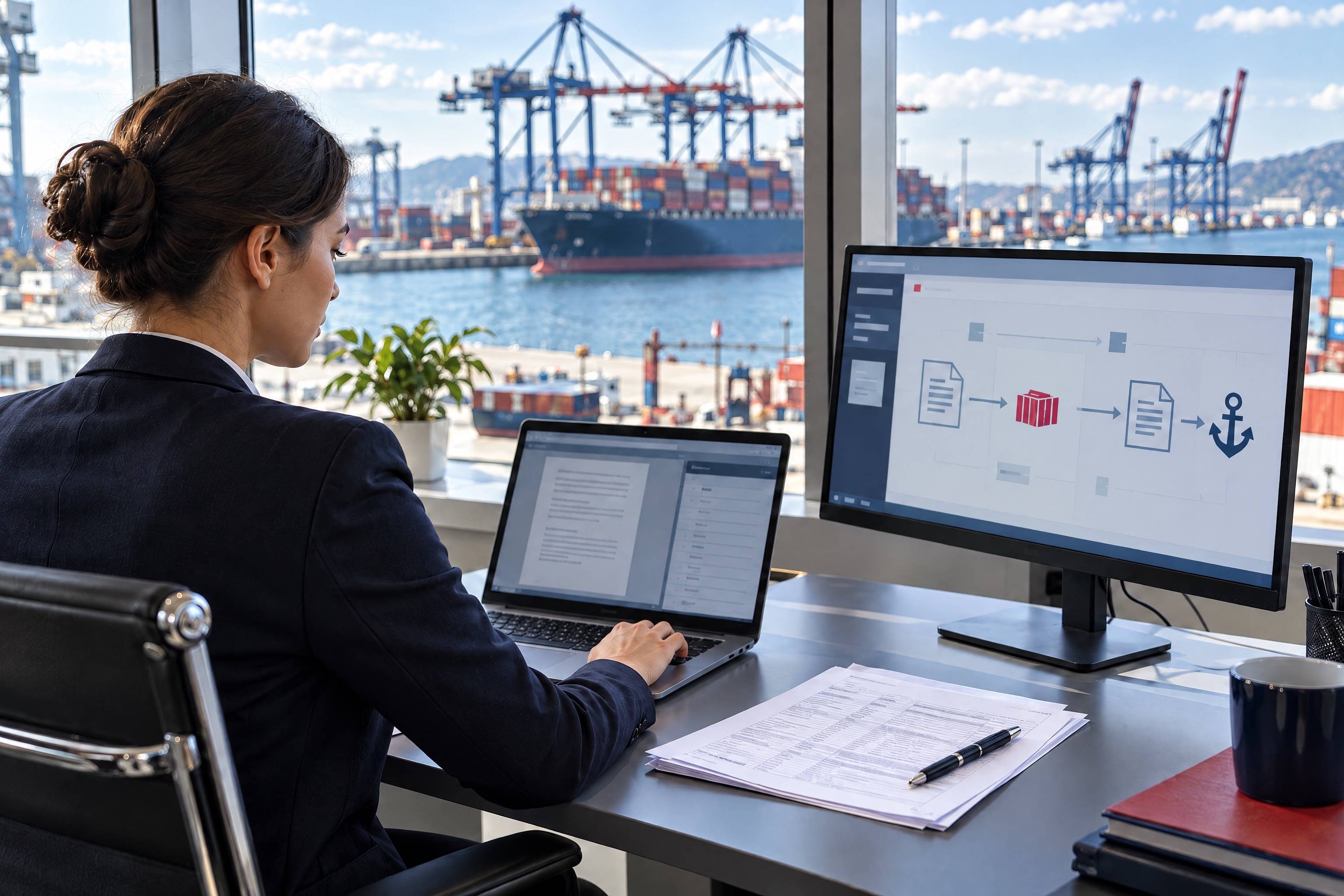
Electronic bill of ladingand digital documents for carriers.
Keep the bill of lading process where your operation already works. Flex Run prepares and manages the B/L data on the voyage record. Flex Connect exchanges it with eBL platforms in a DCSA-aligned way, from issuance to surrender.
Your documentation team can review the B/L data before an issuance request goes out
Electronic bill of lading, Sea waybill, DCSA eBL standard, Issuance, Transfer, Surrender
Electronic bill of lading
Sea waybill
DCSA eBL standard
Issuance
Transfer
Surrender
Electronic bill of lading
Sea waybill
DCSA eBL standard
Issuance
Transfer
Surrender
The basics
What is an electronic bill of lading?
An electronic bill of lading, or eBL, is the digital form of the paper bill of lading. A digital bill of lading only replaces paper when everyone involved can trust who holds the original, which is why eBLs run on dedicated platforms.
Electronic bill of lading (eBL)
The bill of lading in digital form. It does the same jobs as the paper original: a receipt for the goods, evidence of the contract of carriage and, when it is negotiable, a document of title. An eBL platform keeps one electronic original and records who holds it.
Issued by the carrier through an eBL platform
Transferred between shippers, consignees and banks on the platform
Surrendered to the carrier to release the cargo
Sea waybill
A non-negotiable transport document. It is a receipt and evidence of the contract of carriage, but not a document of title. The carrier releases the cargo to the named consignee without an original being surrendered.
No original to transfer or surrender
Suited to shipments where no one needs to trade the cargo in transit
Often used between related parties
DCSA eBL standard
The Digital Container Shipping Association publishes open standards for container shipping, including data and interface standards for the eBL. A DCSA-aligned exchange uses those standards, so a carrier does not build a separate format for every platform.
Common data model for the bill of lading
Standard requests for issuance, transfer and surrender
Conformance to be validated per platform
The carrier document workflow
Prepared and managed in Flex Run.
The shipping line owns the document process. This is one of the maritime workflows in Flex in Action: the B/L lives on the same record as the vessel, voyage, cargo and containers, so every version and status change stays traceable.
01Step 1
Receive and review
Shippers submit their details and review their documents in the Flex Customer Portal. Flex Intelligence can extract and check the details, as an option.
Flex Customer Portal
Flex Intelligence
02Step 2
Prepare the B/L data
Flex Run prepares and manages the B/L data, linked to vessel, voyage, cargo and containers, with versions and document status.
Linked to the voyage record
Versions kept
Status tracked
Flex Run
Step 3
Review before issuance
Your documentation team can review the B/L data on the record before Flex Connect sends an issuance request to an eBL platform.
Who decides
04Step 4
Exchange with the platform
Flex Connect maps and validates the document data, sends the issuance request and receives the platform's responses.
DCSA-aligned API exchange
Issuance requests
Surrender requests and responses
Flex Connect
05Step 5
See and act
Flex Performance shows document status, exceptions and reporting. Flex Intelligence adds checks, summaries and alerts on discrepancies.
Flex Connect sits between your record and the eBL platform. Requests go out in a DCSA-aligned format and responses come back as status and events on the document in Flex Run.
01
Issuance
Flex Connect sends the issuance request. The eBL platform issues the electronic original to the shipper.
02
Transfer
Shippers, consignees and banks access and transfer the eBL through the platform. Status and events come back through Flex Connect into Flex Performance.
03
Surrender
The holder surrenders the eBL. Flex Connect handles the surrender request and response, and Flex Run updates the status.
Run the electronic-original lifecycle: issuance, transfer and surrender.
Trade parties
Shippers, consignees and banks, who access and transfer the eBL through the platform.
Conceptual scope; interfaces and DCSA conformance to be validated.
Related documents
Sea waybills, booking confirmations and cargo manifests.
The eBL is not the only document a shipping line produces. These related workflows sit next to it, on the same voyage and cargo data. Related workflows in the same conceptual scope.
Related documentsOn the same voyage and cargo data
Sea waybills
For shipments that need no document of title: a non-negotiable document to the named consignee, from the same B/L data.
Booking confirmations
Confirmations to the shipper, based on the booking already on the record.
Cargo manifests
The cargo list per voyage, built from the cargo and containers linked to it.
Supporting documents
Documents that belong with the shipment, linked to the right operation and customer.
This workflow follows the Flex Maritime Logistics concept for digital documents at a shipping line. It does not describe a live integration with any named eBL platform.
Conceptual scope; interfaces and DCSA conformance to be validated.
An electronic bill of lading (eBL) is the digital form of the bill of lading. It is a receipt for the goods, evidence of the contract of carriage and, when negotiable, a document of title. An eBL platform keeps one electronic original and records its issuance, transfers and surrender.
02
What is the difference between a sea waybill and a bill of lading?
A bill of lading can be a document of title: whoever holds the original can claim the cargo, so it can be traded in transit. A sea waybill is non-negotiable. The carrier releases the cargo to the named consignee without an original being surrendered.
03
What does DCSA-aligned eBL exchange mean?
The Digital Container Shipping Association (DCSA) publishes open standards for container shipping, including the eBL. In this workflow Flex Connect sends issuance requests and handles responses and surrender requests in line with those standards. Interfaces and DCSA conformance are still to be validated per platform.
04
Which eBL platforms does Flex connect to?
This page describes conceptual scope, not a live integration with a named eBL platform. The approach is a DCSA-aligned exchange through Flex Connect, so the carrier is not tied to one platform's format. Which platforms you work with is part of the conversation.
05
Where does the B/L data come from?
From the shipper's submission and shipping instructions, completed in Flex Run. Shippers can submit details and review documents in the Flex Customer Portal. Flex Run then links the B/L data to vessel, voyage, cargo and containers.
Keep exploring
Related maritime workflows
Documents sit between the shipper's instructions, customs and the voyage itself.